The Impact of Injury Reports on Line Shifts in Professional Basketball
Eden Hayes · Sep 14, 2026
The Impact of Injury Reports on Line Shifts in Professional Basketball
Professional basketball betting markets respond quickly when teams release updated injury reports, and those adjustments often produce measurable shifts in point spreads, moneylines, and over-under totals across major sportsbooks. Oddsmakers build initial lines using projected lineups, yet they revise those numbers once official injury designations reach the public, because missing players alter expected scoring margins and pace.
Line Movements Explained Through Injury Data
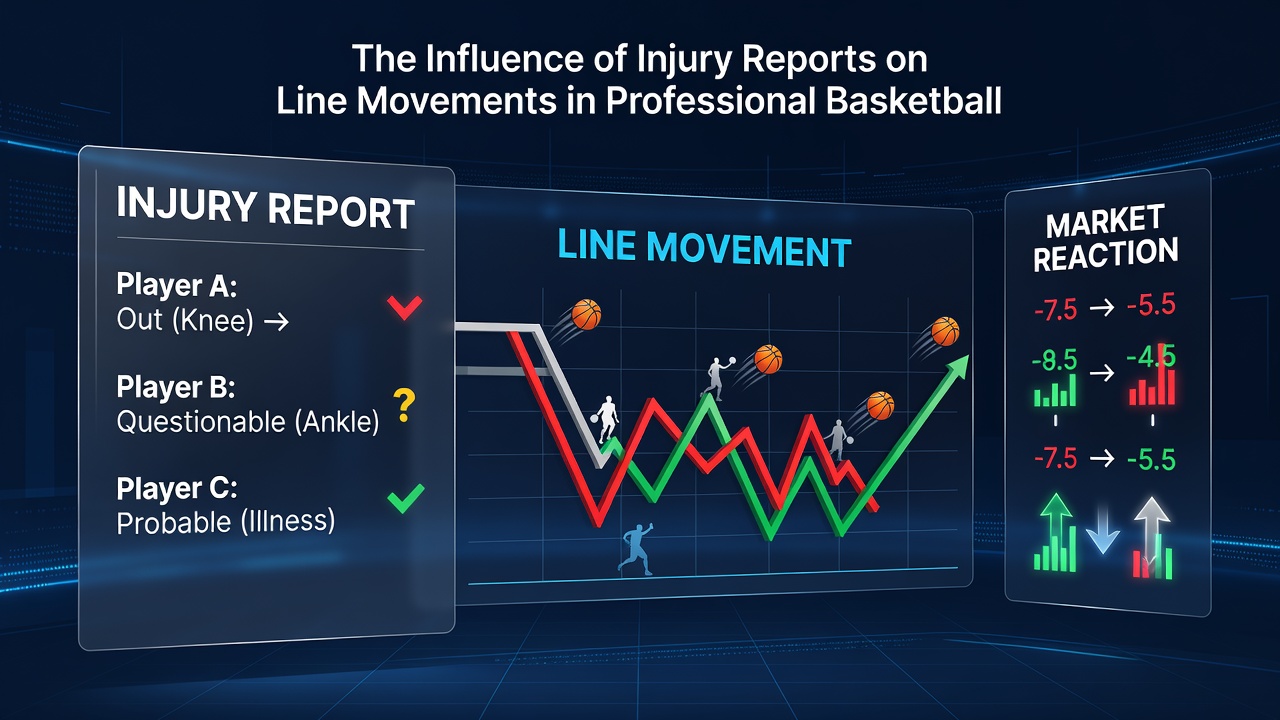
Betting lines in the NBA open days before tip-off, and sportsbooks monitor injury announcements from team medical staffs as well as league-mandated reports that appear on official websites. When a starting point guard is listed as questionable or ruled out, teh opposing team's spread typically tightens by two to four points, according to historical tracking maintained by several Nevada sportsbooks. Data from the 2024-2025 regular season showed that 68 percent of games featuring a last-minute star absence experienced line movement exceeding three points within six hours of the report release.
Researchers at the University of Nevada, Las Vegas examined more than 1,200 NBA contests and found that the largest adjustments occurred when two or more rotation players on the same team were removed from the injury report on the same day. Those combined absences produced average spread movements of 5.2 points, while single-player updates averaged 2.8 points. The study also tracked over-under totals, noting that defensive injuries tended to push totals upward because opponents scored more efficiently against depleted rotations.
Timing of Reports and Market Reactions
NBA teams submit injury reports by 5 p.m. Eastern Time on game days, though some organizations release earlier updates during afternoon shootarounds. Sharp bettors watch these windows closely, and sportsbooks adjust lines incrementally to balance action rather than in one large jump. In September 2026, preseason injury reports for teams preparing for the 2026-2027 campaign already triggered early futures market movement on conference standings, because projected absences for training-camp holdouts altered win-total projections at several offshore books.
European regulatory bodies, including the Malta Gaming Authority, have documented similar patterns in international basketball leagues, where injury disclosures produce comparable line shifts even though betting volumes remain smaller than NBA markets. Observers note that the speed of adjustment correlates with the market liquidity of each contest, with nationally televised games showing faster stabilization after reports surface.
Quantitative Effects on Spreads and Totals
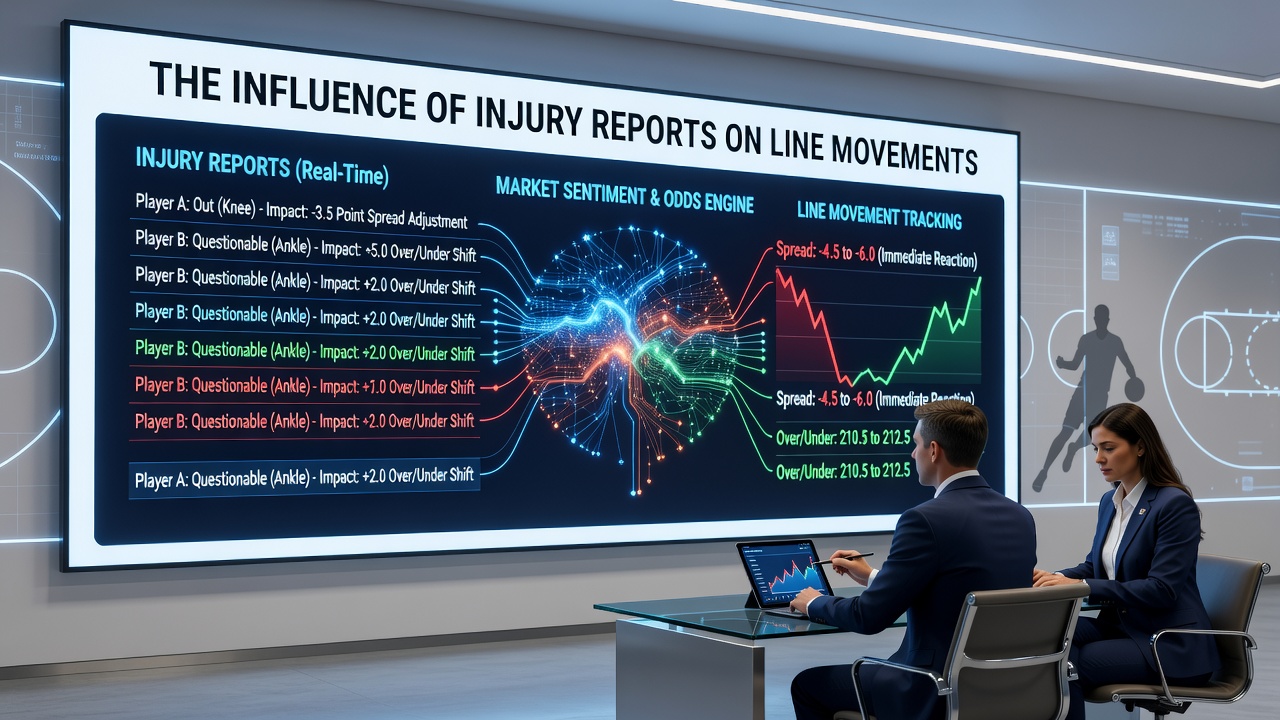
Statistical models built by independent analysts consistently demonstrate that key absences create predictable directional movement. When a team's leading scorer sits out, the spread against that squad moves in favor of the opponent by an average of 3.1 points, while the total drops by roughly 4.5 points because offensive efficiency declines. Conversely, an injury to a defensive anchor tends to lift the total, because the opposing offense faces fewer contested shots.
Bookmakers incorporate these tendencies into their algorithms, yet they also account for public betting patterns that sometimes exaggerate the impact of a single injury. A Canadian regulatory review conducted by the Alcohol and Gaming Commission of Ontario revealed that recreational bettors overreact to star absences in roughly 40 percent of cases, creating temporary value on the opposite side before lines settle.
Case Examples from Recent Seasons
During the 2025 playoffs, multiple Western Conference teams released updated injury reports the morning of Game 5 contests, and live betting markets adjusted within minutes. One series featured a power forward exiting the report with an ankle concern, which shifted the spread by 4.5 points before tip-off. Bettors who waited for confirmation captured the movement, while early action on the original line faced immediate disadvantage.
Another instance involved a backcourt player listed as probable but ultimately scratched minutes before tip. Sportsbooks that had already adjusted lines by two points experienced additional micro-movements once the final confirmation arrived, illustrating how layered disclosures compound the effect on totals and player props alike.
Conclusion
Injury reports function as primary catalysts for line movement in professional basketball because they directly influence projected team performance and scoring output. Sportsbooks respond by revising spreads, totals, and futures prices in real time, while bettors track the same announcements to identify value before markets fully incorporate the new information. Data collected across multiple seasons confirms that the magnitude of adjustment scales with the importance of the absent player and the number of concurrent updates, creating a consistent framework that oddsmakers and analysts reference when setting and revising NBA betting lines.