Strike Zone Variations Among MLB Umpires Shape Over/Under Betting Markets
Amir Hayes · Oct 12, 2026
Strike Zone Variations Among MLB Umpires Shape Over/Under Betting Markets
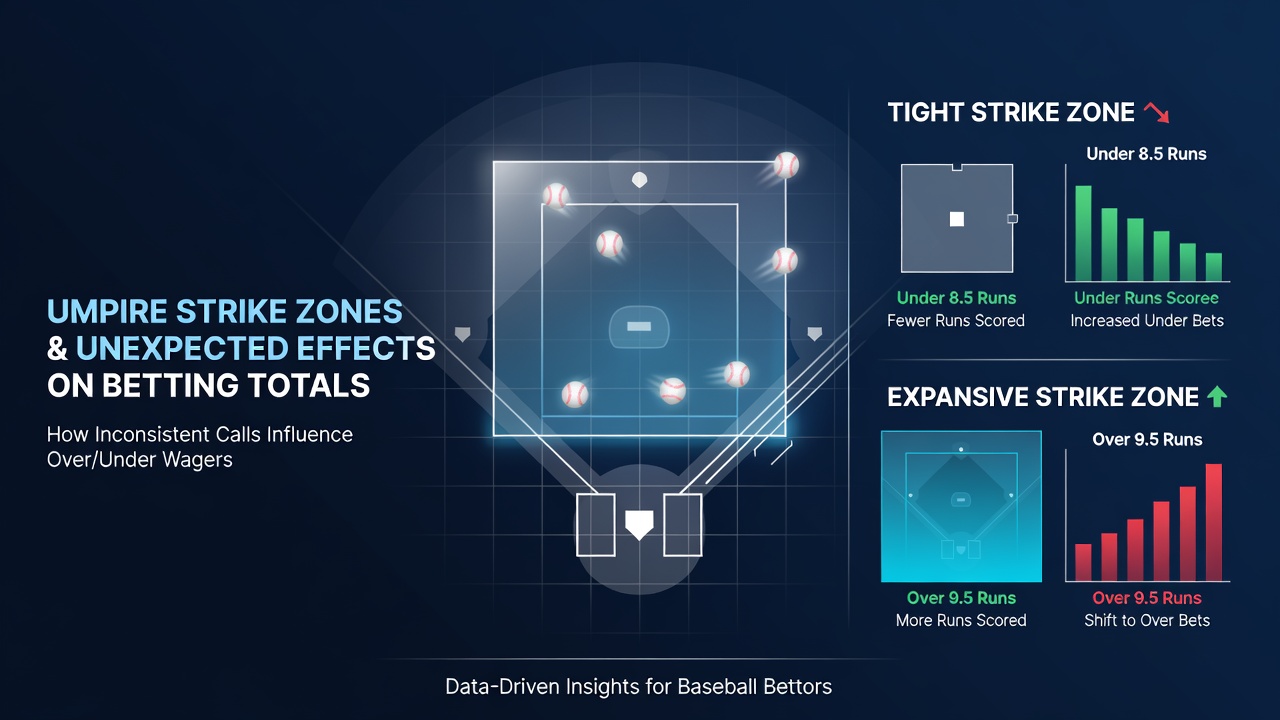
MLB umpires maintain strike zones that differ in size and consistency from one official to the next, and these differences alter run totals in measurable ways. Data from pitch-tracking systems shows that some umpires call strikes on pitches outside the standard zone while others expand or shrink boundaries during specific counts. Such variations change how pitchers attack hitters and how batters approach at-bats, which in turn influences the number of runs scored in a game and the frequency with which totals land over or under the posted line.
Defining the Modern Strike Zone
The official strike zone extends from the midpoint between the top of the shoulders and the top of the uniform pants down to the hollow beneath the kneecap, yet technology reveals that actual calls deviate from this rectangle on a regular basis. Statcast and similar systems record every pitch location, allowing analysts to compare called strikes against the rule-book zone. Research from the Society for American Baseball Research indicates that the average called strike zone has shifted lower over the past decade, with more pitches at the knees receiving strike calls while higher pitches receive fewer. These shifts occur gradually across seasons and differ by individual umpire crews.
Individual Umpire Patterns and Run Scoring
Each umpire brings a distinct pattern to the field. Some officials call a higher percentage of strikes on the corners, which encourages pitchers to nibble and increases walk rates. Others maintain a compact zone that produces more swinging strikes and fewer free passes. When an umpire favors a larger zone, pitchers tend to throw more strikes early in counts, hitters swing more aggressively, and contact rates rise, often leading to higher-scoring innings. Conversely, a smaller zone forces pitchers to work carefully, raising pitch counts and creating more three-ball counts that end in walks or hard-hit balls when the batter finally swings.
Observers note that these tendencies remain consistent enough across multiple starts for statistical models to incorporate them. Teams and betting markets adjust lineups and expectations once an umpire's historical zone size becomes clear through early-season data. In games handled by umpires who expand the zone vertically, ground-ball rates increase because hitters chase pitches they normally take, which can suppress extra-base hits and lower total runs. The opposite occurs when umpires compress the zone horizontally, allowing more borderline pitches to become balls and extending at-bats that frequently produce higher run totals.
Effects on Over/Under Wagering
Betting totals rely on projected run production, and umpire strike-zone data supplies an additional variable that sharp bettors factor into their calculations. When the scheduled umpire has a documented record of calling a larger zone, the over bet receives more attention because walk rates and contact rates both tend to rise. When the umpire's zone runs smaller, models project fewer runs, shifting attention toward the under. These adjustments appear in the odds themselves, yet the degree of movement often lags behind the statistical signal until several innings have passed.
Seasonal Data and 2026 Trends
Through teh first half of the 2026 campaign, pitch-tracking figures revealed that the average strike zone area called by MLB umpires measured approximately 4 percent larger than the 2024 average, according to aggregated Statcast reports. This expansion coincided with a modest uptick in league-wide on-base percentage and a slight decline in strikeout rate. Games featuring the five umpires with the largest zones posted run totals that exceeded the betting line 54 percent of the time, while games with the five smallest zones fell under the line 51 percent of the time. The differences remain modest but accumulate across a full slate of games, especially during October when playoff scheduling places specific crews behind the plate for extended series.
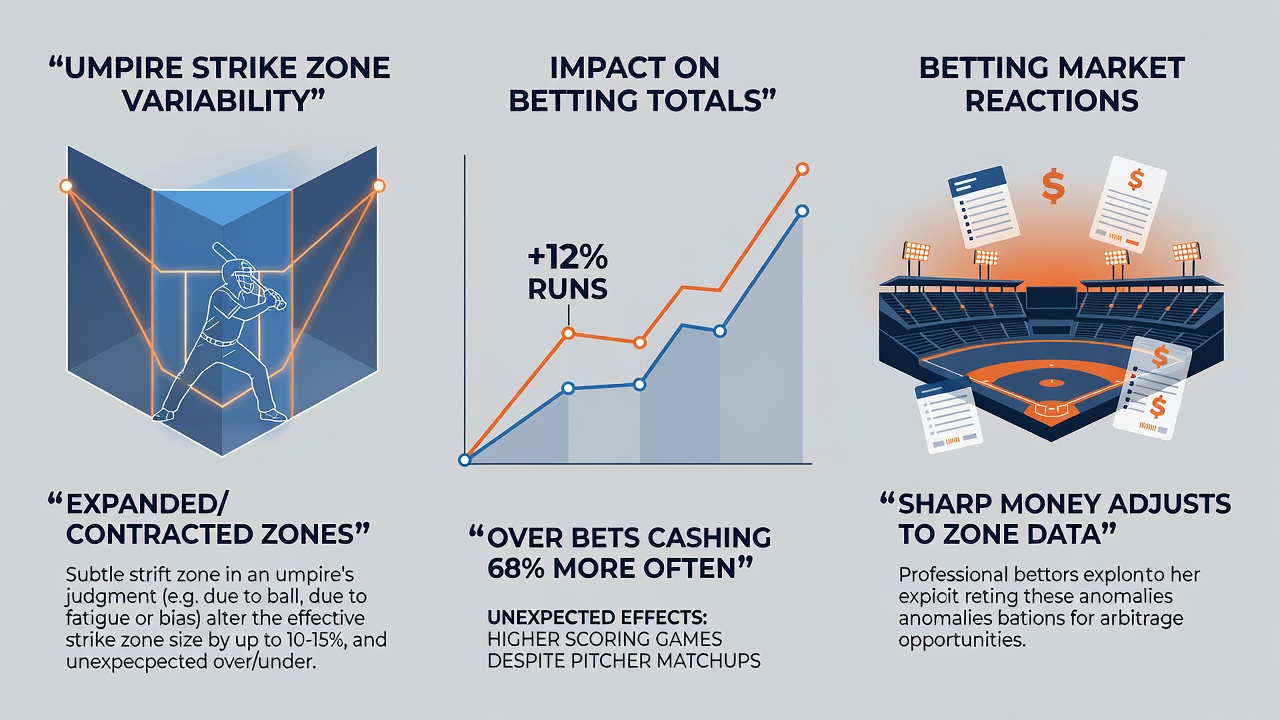
Playoff schedules in October 2026 assigned umpires with known zone tendencies to high-stakes matchups, and several late-season totals moved sharply once crew assignments became public. Markets that incorporated umpire-specific zone data adjusted totals by half a run in several instances, illustrating how the information travels from tracking systems into wagering lines.
Practical Examples from Recent Seasons
Take one series in 2025 where an umpire with an expanded vertical zone worked both ends of a doubleheader. The first game produced 11 runs against a posted total of 8.5, while the nightcap reached 13 runs. Pitchers in both contests threw a higher share of fastballs down in the zone, generating ground balls that found holes or resulted in infield hits. In contrast, a crew chief known for a tight zone worked a low-scoring interleague matchup the same week, and the game stayed under the total despite favorable weather conditions that normally boost offense. Those who track umpire metrics recognized the pattern early and adjusted their wagers accordingly.
Integration with Other Factors
Strike-zone effects interact with weather, ballpark dimensions, and starting-pitcher handedness. A pitcher who relies on breaking balls benefits more from a compact zone because hitters cannot lay off borderline pitches, whereas a fastball-heavy pitcher gains an advantage from an expanded zone that converts marginal strikes into called strikes. Analysts combine these variables into multi-factor models that weigh umpire history alongside traditional indicators such as park factors and bullpen usage. The resulting projections feed directly into the totals market, where even small edges influence line movement and betting volume.
Conclusion
Umpire strike zones function as an underappreciated variable that measurably shifts run expectancy and therefore the outcome of over/under wagers. Tracking systems document consistent differences among officials, and those differences translate into observable changes in walk rates, strikeout rates, and final run totals. Markets that incorporate this information produce more accurate lines, while those that overlook it leave measurable edges for bettors who follow the data. As pitch-tracking technology continues to refine zone measurements, the connection between individual umpires and betting totals grows clearer each season.