Recovery Dynamics and Point Spread Precision in Pro Basketball
Eden Hayes · Nov 23, 2026
Recovery Dynamics and Point Spread Precision in Pro Basketball
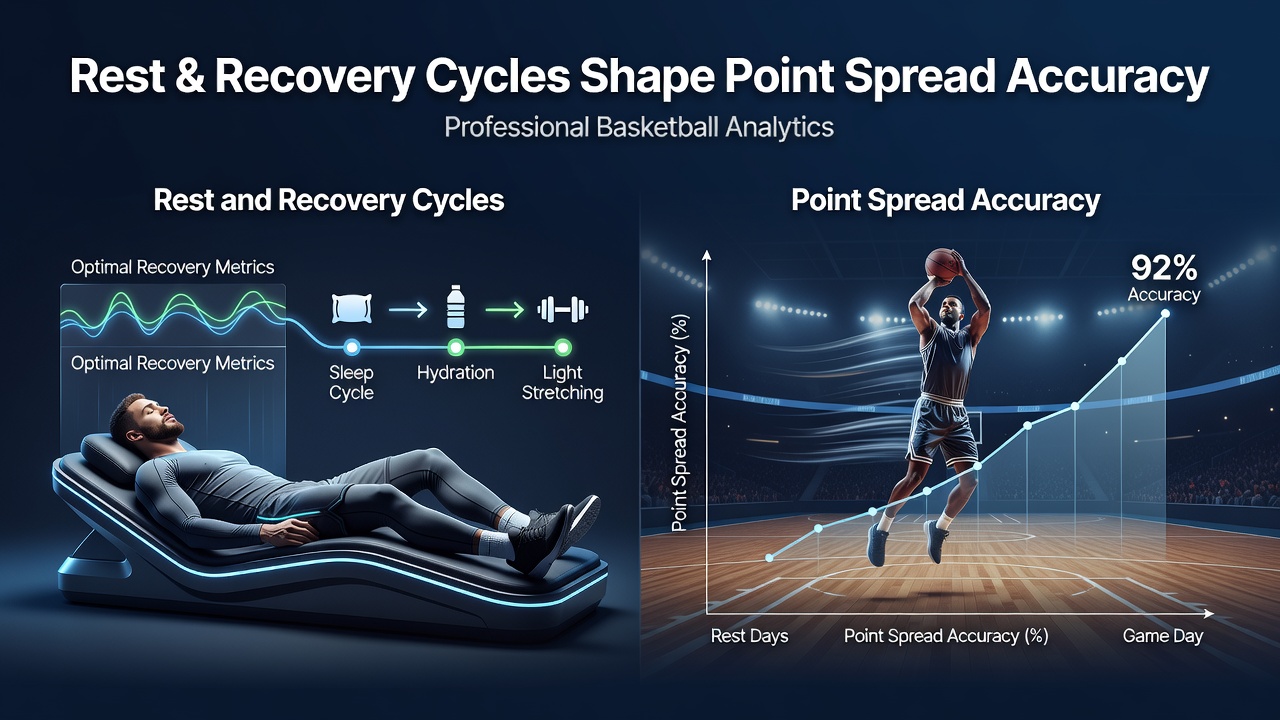
Rest and recovery cycles play a measurable role in how professional basketball teams perform relative to established point spreads, and data from multiple seasons shows consistent patterns tied to game scheduling. Teams facing back-to-back games or extended travel often post reduced shooting efficiency and defensive metrics, which in turn shifts the accuracy of pre-game point spreads set by oddsmakers. Researchers tracking these variables across the NBA have documented how recovery windows influence scoring margins, with shorter rest periods correlating to lower team totals in several tracked datasets.
Schedule Density and Physiological Load
Professional basketball schedules pack games into tight windows, and organizations monitor player workloads through wearable technology that records heart rate variability, sleep duration, and muscle recovery scores. Studies from sports science programs indicate that players logging fewer than 48 hours between contests show declines in sprint speed and three-point accuracy compared to those with multi-day breaks. These measurable drops affect both offensive output and defensive rebounding rates, which directly feed into the calculations that determine point spread lines. Observers note that schedule makers attempt to balance these factors, yet clusters of road games still create recovery deficits that appear in final score differentials.
Travel and Circadian Disruption
Cross-country flights introduce additional recovery challenges through time zone shifts and disrupted sleep cycles, and performance data reveals higher variance in scoring during these stretches. Teams arriving from distant venues frequently exhibit slower transition offense and increased turnover rates in the first half, patterns that betting markets incorporate when adjusting spreads. Figures from league tracking systems show that teams with fewer than 24 hours of adjustment time post-travel cover spreads at lower rates than rested opponents, particularly in November when early-season schedules intensify. One analysis of 2026 regular-season games highlighted how Pacific Division clubs traveling eastward posted reduced fourth-quarter production, altering the margin outcomes that point spreads aim to predict.
Statistical Correlations in Spread Accuracy
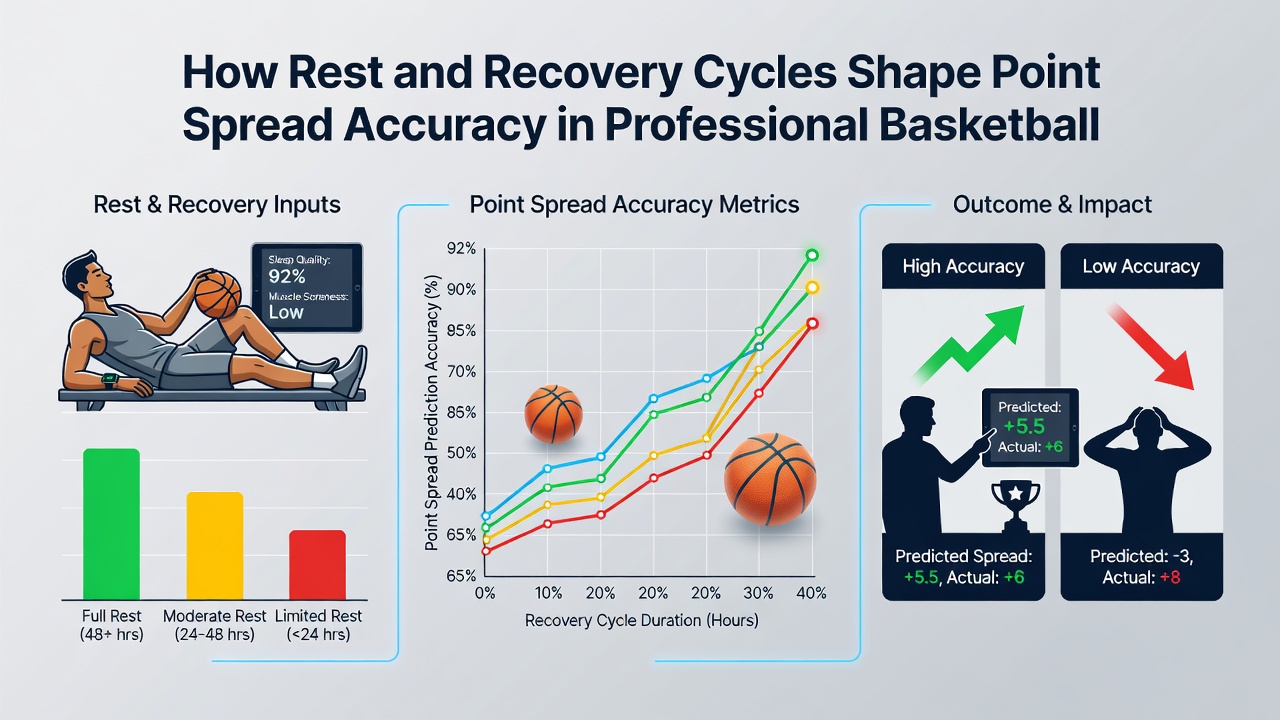
Quantitative reviews of historical NBA results demonstrate that point spread accuracy improves when both teams enter contests with comparable rest levels, whereas mismatches in recovery days widen the gap between predicted and actual margins. Data compiled by performance analytics groups links rested home teams to higher cover rates against fatigued visitors, and these trends hold across multiple seasons. Models that incorporate rest variables alongside traditional factors such as offensive rating and pace adjust spread projections with greater precision than those relying solely on season averages. Research published through academic channels, including work from Canadian sports institutes, confirms that incorporating recovery metrics reduces error rates in margin predictions by measurable percentages.
Coaching Adjustments and Load Management
Coaches respond to recovery data by altering rotation minutes and strategic emphases, and these decisions further shape how spreads perform. Load management protocols that rest star players on short-turnaround nights reduce scoring ceilings, which in turn compresses totals and shifts spread viability. League reports indicate that teams employing proactive rest strategies maintain more consistent defensive efficiency, while those pushing through fatigue encounter elevated foul rates and lower assist-to-turnover ratios. Such adjustments create observable deviations from baseline performance models that oddsmakers use when releasing lines.
External Data Integration
Betting markets now integrate external datasets from sports science providers to refine spread calculations, and organizations monitoring league-wide recovery trends report tighter alignment between expected and realized outcomes when these inputs are included. A 2026 mid-season review by European sports research bodies noted that spreads incorporating rest differentials showed reduced variance in closing margins during high-density schedule periods. These refinements allow for more granular assessments of how cumulative fatigue influences both team and player contributions to final scores.
Conclusion
Recovery cycles exert a documented influence on professional basketball performance metrics that determine point spread accuracy, with schedule density, travel demands, and load management all contributing measurable effects. Statistical reviews and performance tracking systems continue to refine models that account for these variables, producing projections that reflect actual game conditions more closely. Data from recent seasons, including patterns observed in November 2026, underscores the ongoing relevance of rest considerations in evaluating margin outcomes across the league.